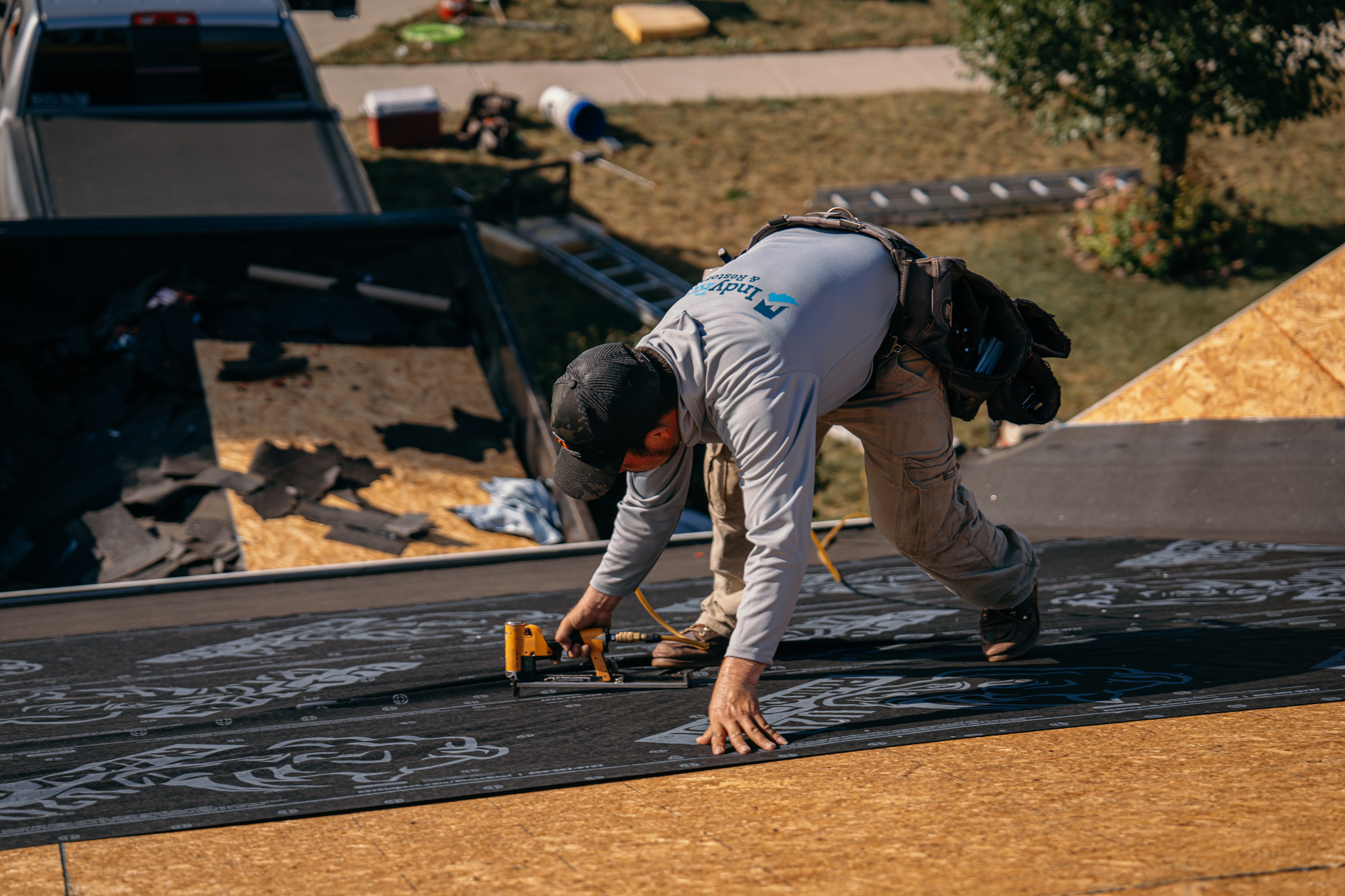
Roofing systems suited to industrial buildings
Several roofing systems suit large industrial buildings, and for a Trader's Point facility owner, understanding which fit clarifies the options for a new or replacement roof. The right system depends on the building, its use, and its conditions, and at industrial scale the choice carries real weight because it applies across a large, expensive area.
Single ply membranes at scale
Single ply membranes, TPO, EPDM, and PVC, are common on large industrial roofs, since they install efficiently over large areas, come in wide sheets that cover ground quickly, and offer engineered properties suited to specific conditions. TPO's reflectivity can reduce cooling loads on a large building, while PVC resists chemicals from industrial exhaust and EPDM handles temperature swings well. For a facility, single ply systems are often a practical choice at scale, balancing efficient installation over a large area with the membrane properties that fit the building's exposures. Costs typically run in the range of several dollars per square foot depending on the membrane and the specifics of the installation, and a free assessment gives a real number for your particular roof rather than a rough guess.
Built up and modified bitumen
Built up roofing and modified bitumen suit industrial roofs that value redundancy and durability, particularly where foot traffic and physical wear are significant, since their multi layer construction handles demanding conditions and tolerates minor issues without immediate failure. These traditional systems have long track records on large buildings. For a Marion County facility with heavy rooftop activity or a preference for proven, redundant construction, built up or modified bitumen can be a strong choice, offering toughness across a large roof. Their cost varies by the number of plies and the specifics of the installation, and like any system they reach their full life when properly installed and maintained, which matters all the more across a large area where a shortcut repeats over many square feet.
Metal roofing for industrial structures
Metal roofing suits many industrial structures, especially those with sloped roofs or where a long service life and durability are priorities, since metal can last several decades and handles the elements well. Standing seam and other metal systems are common on industrial, manufacturing, and agricultural buildings. For a Trader's Point facility with a suitable structure, metal roofing offers longevity and durability that can make sense over the long term. It carries a higher upfront cost than membrane systems, but its long service life can justify the investment for the right building, and at industrial scale, a roof that lasts decades reduces the frequency of the major projects that replacing a large roof represents, which has real value to a facility planning over the long run.
Coatings to extend large roofs
Roof coatings are valuable at industrial scale for extending the life of a sound existing roof, since coating a large roof costs far less than replacing it and adds years of protection. Reflective coatings can also reduce cooling loads across a large building, a meaningful benefit given the area involved. For a facility with a sound but aging roof, a coating can be a cost effective way to extend it, typically at a low cost per square foot. This defers the major expense of replacing a large roof while adding protection and, with reflective coatings, energy benefits across the substantial surface, provided the roof is a sound candidate confirmed by inspection including a check for hidden moisture beneath the membrane.
The full roof assembly and insulation
An industrial roof is more than its surface membrane, since the insulation and the rest of the assembly affect the roof's performance, energy efficiency, and how the system goes together. On a large building, the insulation contributes meaningfully to energy costs. For a Marion County facility, considering the full assembly, the insulation, the deck, and how the system is built up, matters alongside the membrane choice, since the assembly as a whole determines how the roof performs and lasts. A replacement is also an opportunity to address the insulation and assembly, improving the roof's energy performance across a large area where the savings can add up over the building's life.
Matching the system to the building's use
Beyond the building's structure, its use shapes the right system, since a facility with heavy chemical exhaust, intense rooftop traffic, or specific energy goals benefits from a system matched to those conditions. The use is part of the fit. For a Trader's Point facility, considering how the building is used, what the roof is exposed to, and what the owner values guides the choice toward the system that genuinely suits the operation, since at industrial scale, matching the roof to the real conditions of the facility is what delivers a roof that performs and lasts rather than one that merely covers the building and disappoints over time.
Matching the system to the facility
Single ply membranes, built up and modified bitumen, metal, and coatings each suit different industrial buildings and conditions, with the right choice depending on the structure, use, exposures, assembly, and goals. For a facility owner, matching the system to the building is key, since the large area magnifies the consequences of the choice, making it worth selecting the system that genuinely fits the facility rather than defaulting to one option.
Planning ahead for an industrial roof's eventual needs serves a facility well, since knowing roughly when restoration or replacement will be required allows the owner to budget and plan rather than face a sudden large expense. For a Marion County facility, tracking the roof's condition over time through regular inspection turns major roof decisions into planned investments, which is far easier to manage than reacting to a failure, and it gives the operation the predictability that a large, expensive asset like an industrial roof deserves.
Find the right system for your facility
Trader's Point Metal Roofing assesses Trader's Point industrial buildings and recommends the roofing system that fits the structure, use, and conditions, then installs it at scale. Call {phone} to find the right system for your large facility roof. The right system, properly installed, is what delivers value on a large industrial roof.